
You wake up one morning and notice that your face has suddenly broken out. Or perhaps you've been dealing with itching, hair fall, or a stubborn patch on your skin for several weeks.
The usual reaction is to try a new cream, search for a home remedy, or wait and see if it disappears. Sometimes that works. But when a skin problem keeps returning or starts getting worse, guessing can make things more difficult.
So, when should you actually see a dermatologist? And when does it make sense to choose a hospital instead of treating the issue yourself?
If you're looking for the Best Hospital for dermatologist in dwarka, here's the practical way to think about it.
Dermatologists deal with conditions affecting the skin, hair, nails, and scalp.
That includes everyday concerns such as acne and dandruff, but also conditions that may require long-term medical care.
You may need a dermatologist for:
Persistent acne or acne scars
Excessive or sudden hair loss
Repeated fungal infections
Eczema or psoriasis
Persistent itching
Skin allergies
Unusual pigmentation
Warts and skin growths
Scalp infections
Changes in moles
Nail infections or abnormalities
The important thing is persistence. A temporary irritation may not need specialist care, but a problem that refuses to settle deserves proper evaluation.
This is one of the most useful questions patients can ask.
If you've tried several creams and the problem keeps coming back, that's usually a good reason to stop experimenting.
Some skin conditions can look similar but require completely different treatments. A cream that helps one condition may do very little for another, and using the wrong product repeatedly can sometimes irritate the skin further.
A dermatologist can examine the condition and decide what treatment makes sense instead of making you rely on trial and error.
A standalone dermatology clinic can be perfectly suitable for many routine concerns.
But a hospital may offer an additional advantage when your symptoms are complicated or may need support from another specialty.
For example, persistent hair loss may require dermatology evaluation, while the doctor may also consider whether nutritional or hormonal factors need to be investigated.
Similarly, certain skin symptoms may occur alongside allergies, infections, or other medical conditions.
A multispeciality hospital can make coordination easier when additional medical evaluation is required.
This is something we strongly believe.
Patients often think of dermatology as being mainly about appearance—acne, pigmentation, wrinkles, or hair loss.
But dermatology is also medical care.
Persistent itching, recurring infections, unusual skin changes, severe inflammation, and certain types of hair loss may need proper diagnosis. Treating them only as cosmetic problems can delay the care you actually need.
Good dermatology starts with finding the cause, not simply covering up the symptom.
Many patients worry that they will immediately be prescribed several medicines or undergo expensive tests.
That shouldn't be the assumption.
A good consultation usually starts with a discussion about your symptoms. The dermatologist may ask when the problem started, whether it has changed, what products you've used, and whether you've experienced something similar before.
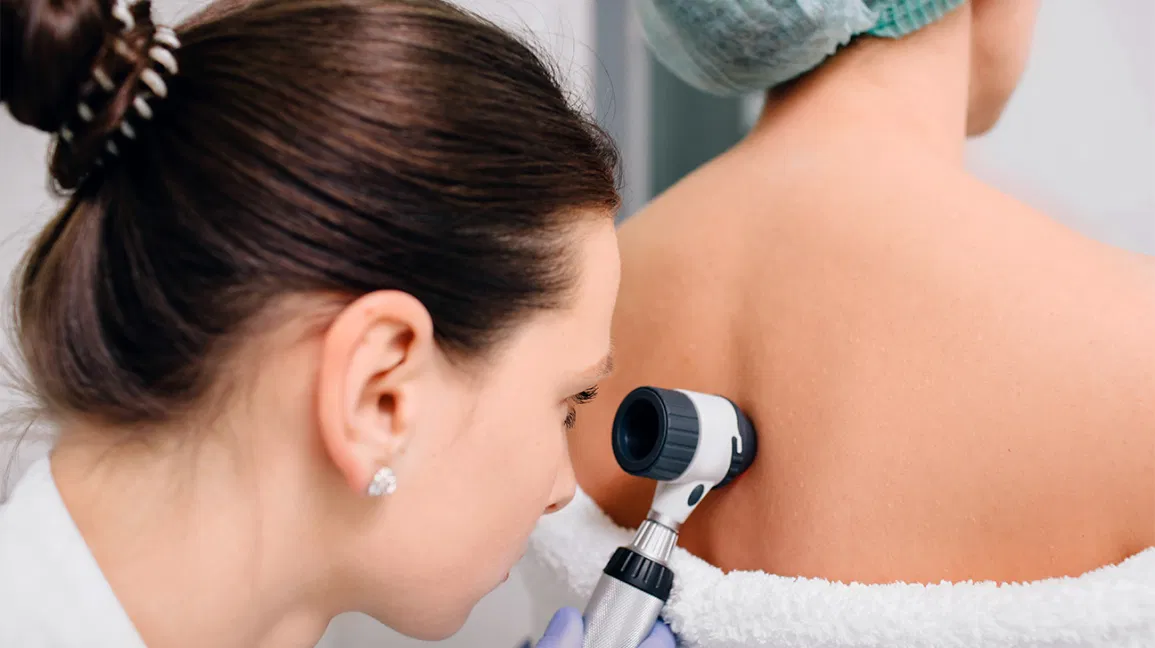
The doctor then examines the affected skin, scalp, hair, or nails.
Further testing is considered only when it is medically useful. Not every patient needs a long list of tests.
At Joms Care Hospital, patients approaching dermatology with persistent skin or hair concerns can receive an initial specialist assessment and, when medically necessary, guidance toward other relevant services. This can be useful when a skin complaint may involve factors beyond the skin itself and needs a broader evaluation.
Don't leave out details because they seem unimportant.
Tell the doctor about new skincare products, cosmetics, hair treatments, medicines, supplements, previous skin conditions, and treatments you've already tried.
If your symptoms come and go, photographs taken during a flare-up can also be useful.
The more accurately you describe what happened, the easier it may be for the doctor to understand the pattern.
Skin diseases affect a surprisingly large part of the population. The World Health Organization reported in 2024 that nearly 1.8 billion people are affected by skin diseases at any given time worldwide.
That puts everyday concerns like persistent rashes, acne, fungal infections, and other skin conditions into perspective. Skin health is not simply about appearance; it can have a real effect on comfort and quality of life.
If you're comparing options for the Best Hospital for dermatologist in dwarka, don't make your decision based only on online ratings or promotional offers.
Instead, consider these factors:
Check whether qualified dermatology specialists are available and whether they have experience with the type of problem you're experiencing.
If your doctor believes further evaluation is necessary, having appropriate diagnostic services available can make the process more convenient.
For complicated cases, access to other medical specialties can be useful if the dermatologist suspects that another health issue may be contributing to the problem.
Skin conditions often need monitoring. Ask whether you can return for follow-up and whether your treatment can be adjusted as your condition changes.
Some symptoms shouldn't be left for weeks.
Rapidly spreading skin changes, severe swelling, extensive blistering, signs of infection, or a serious allergic reaction require prompt medical attention.
If you experience difficulty breathing or other severe symptoms along with a suspected allergic reaction, seek emergency medical care rather than waiting for a routine dermatology appointment.
Consider visiting a dermatologist when a skin, hair, scalp, or nail problem persists, repeatedly returns, becomes painful or severe, or doesn't improve with basic care.
No. Dermatologists treat medical conditions involving the skin, hair, scalp, and nails, including infections, eczema, psoriasis, allergies, pigmentation problems, and other conditions.
For straightforward skin concerns, either may be appropriate. A multispeciality hospital can be particularly useful when your condition may require diagnostic services or input from other medical specialties.
You don't need a dermatologist every time you get a small pimple or temporary irritation.
But if something keeps coming back, refuses to improve, changes unexpectedly, or starts affecting your comfort and confidence, don't spend months trying random products.
If you're searching for the Best Hospital for dermatologist in dwarka, look for qualified dermatology care, sensible diagnosis, appropriate treatment, diagnostic support, and reliable follow-up.
Have a skin, hair, scalp, or nail problem that isn't going away? Schedule a consultation with a qualified dermatologist and get the cause assessed before trying another round of self-treatment.


